




Walk down any supermarket aisle and you'll find dozens of plant-based milks - oat, almond, soy, cashew - all promising to be a healthy swap for dairy. But here's what most labels won't tell you: the moment plant milk is processed, packaged, and shelf-stabilized, it starts losing the very nutrients that made you choose it in the first place.
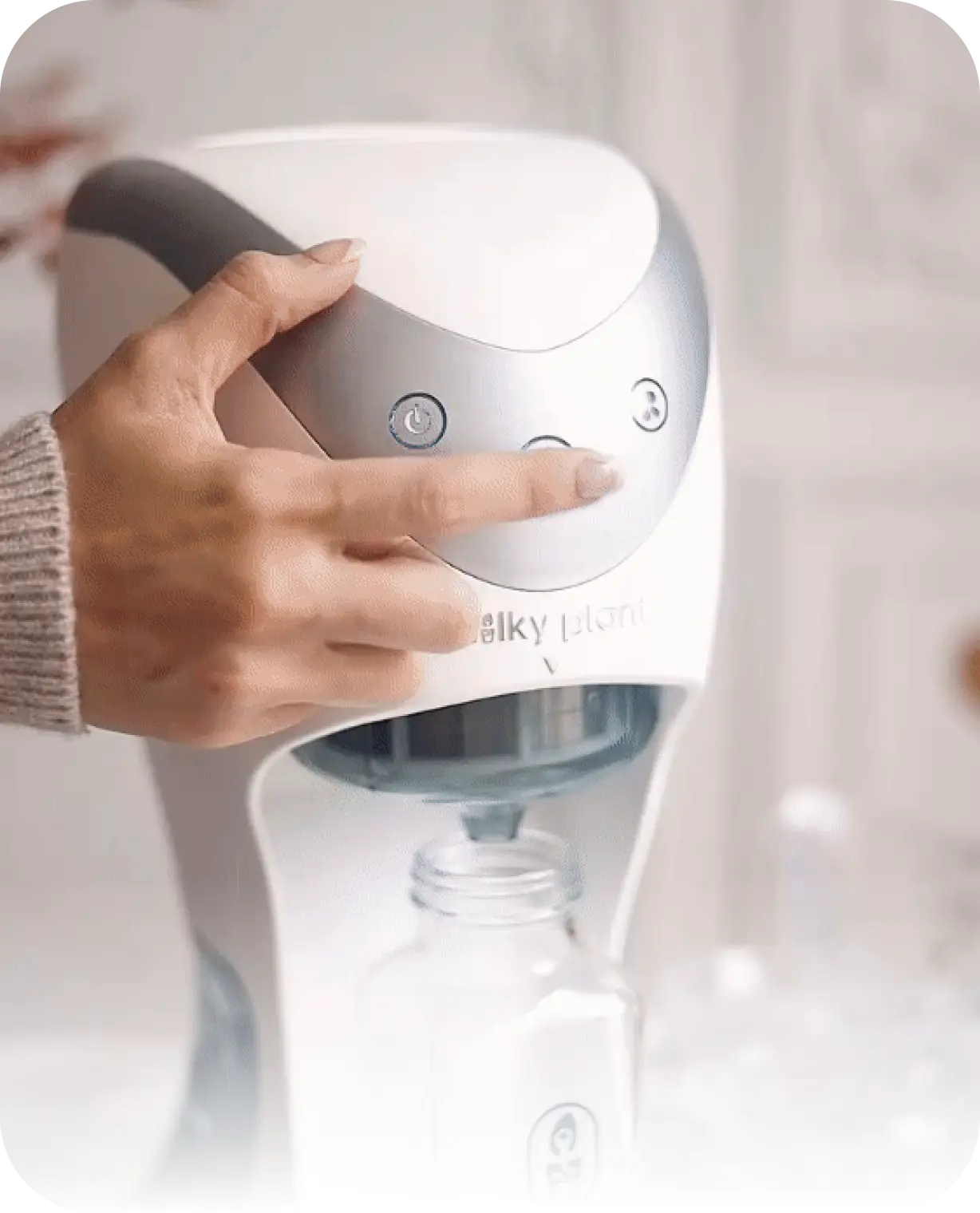
That's the gap Milky Plant Plus was built to close.
The Problem With "Shelf-Stable"
Commercial plant milks are made to survive weeks - sometimes months - on a shelf and in your fridge after opening. To get there, manufacturers rely on:
- Ultra-high temperature (UHT) processing, which heats milk to 135-150°C for a few seconds to kill bacteria and extend shelf life
- Homogenization, which breaks down fat particles for a uniform, non-separating texture
- Long storage windows, during which oxidation and light exposure gradually degrade sensitive compounds
Each of these steps is necessary for mass production and distribution. But heat-sensitive nutrients don't survive the trip unscathed.
What Gets Lost in Processing
Research on UHT and long-term storage of plant-based beverages has consistently shown measurable declines in:
- Vitamin B12 and B2 (riboflavin) - both heat- and light-sensitive, often added synthetically to compensate for losses during processing
- Vitamin C - largely destroyed by heat exposure above 100°C
- Polyphenols and antioxidants - naturally present in nuts, oats, and seeds, but reduced by high heat and oxidation over time
- Healthy fats - prone to oxidative degradation the longer they sit in packaging, even in aseptic cartons
This isn't a flaw in any one brand. It's a structural tradeoff every shelf-stable product has to make: reach and shelf life, at the cost of nutritional freshness.
How Milky Plant Plus Changes the Equation
Milky Plant Plus is designed around a simple principle: make it fresh, drink it fresh, and skip the steps that cause nutrient loss in the first place.
1. Cold, low-heat extraction Rather than boiling raw ingredients or relying on industrial UHT cycles, Milky Plant Plus extracts plant milk using controlled, gentler processing. Because the milk never sits through prolonged high-heat treatment, heat-sensitive nutrients like B-vitamins and antioxidants stay largely intact - the same principle that makes cold-pressed juice nutritionally richer than pasteurized juice from concentrate.
2. Zero storage window Every batch is made to be consumed within days, not months. There's no multi-week supply chain, no warehouse sitting time, and no light-exposed shelf life to account for. The nutrients you extract are close to the nutrients you drink.
3. Whole-ingredient extraction Because you control what goes in - oats, almonds, cashews, soy - nothing is diluted, fortified synthetically, or stripped down to hit a manufacturing cost target. What you get out reflects what you put in.
4. No preservatives, stabilizers, or emulsifiers needed Shelf-stable milks often add gums and stabilizers to prevent separation over their long shelf life. Fresh-made milk doesn't need to survive that long, so it doesn't need them - meaning a shorter, cleaner ingredient list by design, not by marketing.
Store-bought plant milk isn't "bad" - it's engineered for convenience and shelf life, and that engineering has a nutritional cost. Milky Plant Plus takes a different bet: less time between extraction and glass means less time for heat, light, and oxidation to do their damage.
If you're choosing plant milk for its nutritional profile in the first place, freshness isn't a nice-to-have. It's the whole point.