






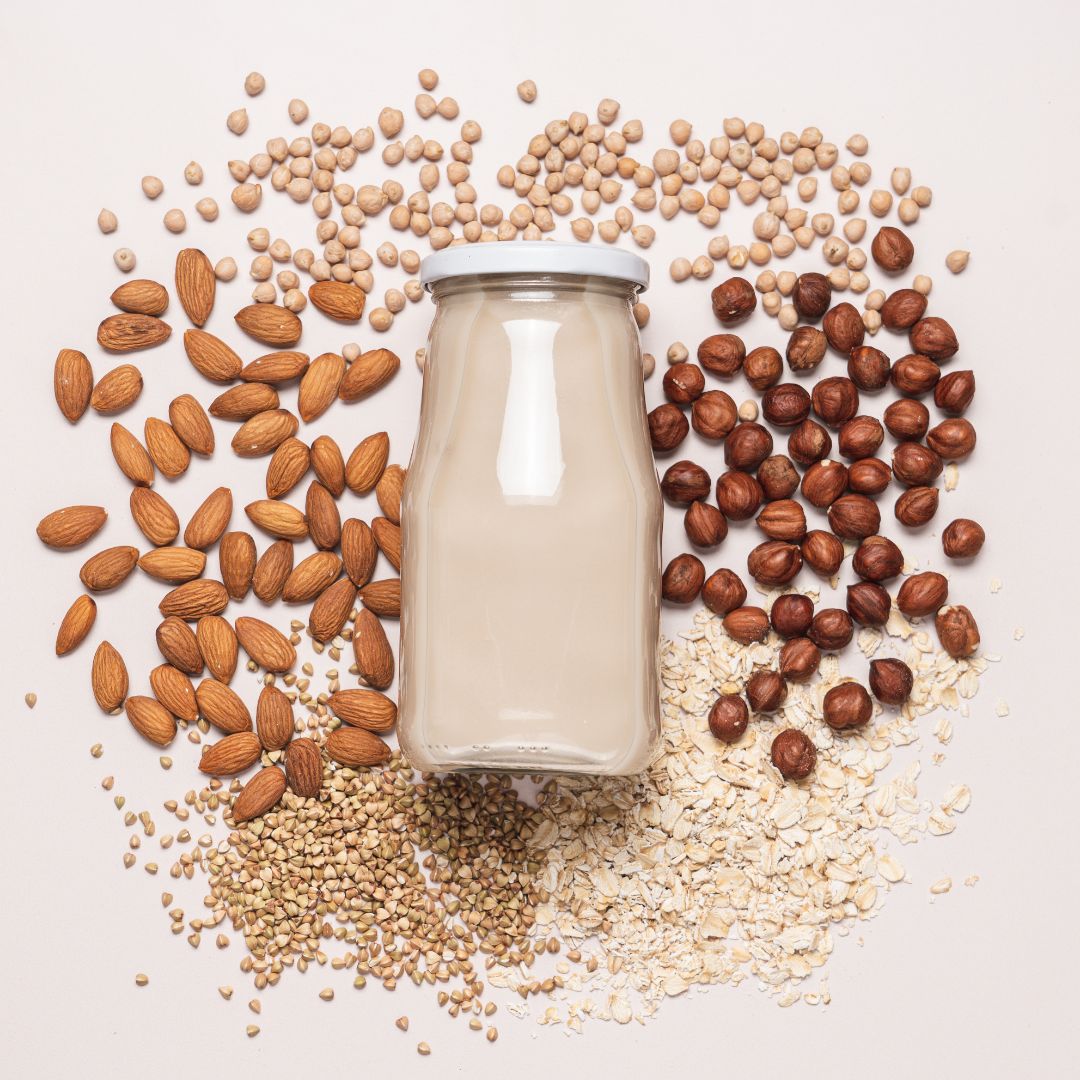
Nutritional Value Table of Plant-Based Milks

In recent years, plant-based milks have gained immense popularity as an alternative to traditional dairy milk. Whether you're lactose intolerant, vegan, or simply looking to reduce your environmental footprint, there's a plant-based milk option to suit your needs. These milks, made from various plant sources, offer a plethora of flavors and nutritional benefits. In this blog, we will explore the nutritional value of some common plant-based milks and help you make informed choices about what's best for your health.

  1. Almond Milk:

Rich in vitamin E for skin, low-calorie, heart-healthy fats. With calcium, magnesium for bones. Nutritious choice supporting overall well-being.

Nutritional Value (per 1 cup, unsweetened):

  • Calories: 13-17
  • Protein: 1g
  • Fat: 1g
  • Carbohydrates: 0-2g
  • Calcium: 0 (unfortified)
  1. Soy Milk:

A protein-packed option with essential vitamins (like B12), minerals (calcium, iron), and heart-healthy omega-3s. A wholesome plant-based alternative.

Nutritional Value (per 1 cup, unsweetened):

  • Calories: 80
  • Protein: 7g
  • Fat: 4g
  • Carbohydrates: 4g
  • Calcium: 8mg (unfortified)
  1. Oat Milk:

Rich in fiber, vitamins, and minerals, including B vitamins, calcium, and iron. A nutritious, plant-based option.

Nutritional Value (per 1 cup, unsweetened):

  • Calories: 120
  • Protein: 3g
  • Fat: 5g
  • Carbohydrates: 16g
  • Calcium: 10mg (unfortified)
  1. Cashew Milk:

Creamy, nutty, dairy-free. Packed with copper, magnesium, phosphorus, vitamin K, E.

Nutritional Value (per 1 cup, unsweetened):

  • Calories: 45
  • Protein: 0g
  • Fat: 4.5g
  • Carbohydrates: 1g
  • Calcium: 0 (unfortified)
  1. Pumpkin Seed Milk:

Pumpkin seed milk offers zinc, magnesium, omega-3s, and protein—a nutrient-rich, plant-based choice.

Nutritional Value (per 1 cup, unsweetened):

  • Calories: 45
  • Protein: 0g
  • Fat: 4.5g
  • Carbohydrates: 1g
  • Calcium: 0 (unfortified)
  1. Rice Milk

A protein-packed option with essential vitamins (like B12), minerals (calcium, iron), and heart-healthy omega-3s. A wholesome plant-based alternative.

Nutritional Value (per 1 cup, unsweetened):

  • Calories: 70
  • Protein: 0g
  • Fat: 1g
  • Carbohydrates: 15g
  • Calcium: 2mg (unfortified)
  1. Coconut Milk

Coconut milk is creamy and flavorful, making it a popular choice for culinary uses and in various recipes. Creamy and tropical, rich in healthy fats, iron, and magnesium.  The beverage version is typically lower in calories and fat.

Nutritional Value (per 1 cup, unsweetened):

  • Calories: 45
  • Protein: 0g
  • Fat: 4.5g
  • Carbohydrates: 1g
  • Calcium: 4mg (unfortified)

Plant-based milks offer a diverse array of choices to suit various tastes and dietary needs. Understanding their nutritional value, including unfortified calcium content, is essential when incorporating them into your diet. Whether you prefer low-calorie almond milk, protein-rich soy milk, creamy oat milk, cashew milk, or pumpkin seed milk, these plant-based alternatives can enhance your diet while aligning with your dietary preferences and restrictions.

For those who want complete control over the ingredients in their plant milk, creating it fresh at home is the ideal approach. With Milky Plant, you can effortlessly craft any plant-based milk you love with a simple press of a button. It's a convenient and delicious option available right in your own kitchen, ensuring that your plant-based milk is both healthy and tailored to your tastes.

Back to blog
  • How Water Supports Liver Function (Without Detox Fads)

    How Water Supports Liver Function (Without Deto...

    The liver is one of the hardest-working organs in the human body. Every day it filters blood, metabolizes nutrients, breaks down toxins, and regulates hundreds of biochemical reactions essential for...

    How Water Supports Liver Function (Without Deto...

    The liver is one of the hardest-working organs in the human body. Every day it filters blood, metabolizes nutrients, breaks down toxins, and regulates hundreds of biochemical reactions essential for...

  • Plant-Based Iron Absorption: Tips for Maximizing Uptake

    Plant-Based Iron Absorption: Tips for Maximizin...

    Iron is an essential mineral that plays a central role in oxygen transport, energy production, and cognitive function. It forms a key component of hemoglobin, the protein in red blood...

    Plant-Based Iron Absorption: Tips for Maximizin...

    Iron is an essential mineral that plays a central role in oxygen transport, energy production, and cognitive function. It forms a key component of hemoglobin, the protein in red blood...

  • The Environmental Impact of Bottled Water vs Filtration

    The Environmental Impact of Bottled Water vs Fi...

    Water is essential for life, yet the way we access it has a significant environmental impact. Over the past few decades, bottled water consumption has surged worldwide, often marketed as...

    The Environmental Impact of Bottled Water vs Fi...

    Water is essential for life, yet the way we access it has a significant environmental impact. Over the past few decades, bottled water consumption has surged worldwide, often marketed as...

  • How Mild Dehydration Affects Energy & Focus (Scientific Breakdown)

    How Mild Dehydration Affects Energy & Focus

    Most people associate dehydration with extreme situations: intense heat, long workouts, or visibly feeling thirsty. However, science shows that even mild dehydration, as little as a 1–2% loss of body...

    How Mild Dehydration Affects Energy & Focus

    Most people associate dehydration with extreme situations: intense heat, long workouts, or visibly feeling thirsty. However, science shows that even mild dehydration, as little as a 1–2% loss of body...

  • Hydration for Women: Does It Differ?

    Hydration for Women: Does It Differ?

    Water is essential for life, it fuels every cell, supports digestion, helps regulate body temperature, and keeps our brains sharp. But when it comes to hydration, does a woman’s body...

    Hydration for Women: Does It Differ?

    Water is essential for life, it fuels every cell, supports digestion, helps regulate body temperature, and keeps our brains sharp. But when it comes to hydration, does a woman’s body...

  • Plant-Based Living as a Seasonal Practice: Eating in Harmony With Nature

    Plant-Based Living as a Seasonal Practice: Eati...

    In a world of year-round strawberries and imported superfoods, we’ve lost touch with something beautifully simple: eating with the seasons. Plant-based living isn’t just about what we remove from our...

    Plant-Based Living as a Seasonal Practice: Eati...

    In a world of year-round strawberries and imported superfoods, we’ve lost touch with something beautifully simple: eating with the seasons. Plant-based living isn’t just about what we remove from our...