



We talk a lot about what's in our drinking water at Milky Plant. But there's another daily ritual where water quality quietly shapes how you feel: the shower.
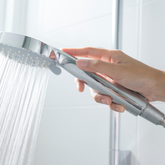
Every morning, most of us stand under a stream of tap water for 8 to 10 minutes, letting it hit our skin, our scalp, and our lungs (yes, lungs - more on that below). And most of us have never asked what's actually in that water, or what it's doing to us.
Turns out, the answer is more interesting - and more relevant - than you'd expect.
Chlorine: the disinfectant that doesn't stop at your skin
Chlorine is added to tap water for a good reason: it kills bacteria and keeps water systems safe. But once that water reaches your shower, chlorine keeps doing chemistry - just now on you.
Hot water opens your pores and softens the outer layer of your hair, which means more contact between chlorine and your skin and scalp. Chlorine is a strong oxidizer, and hair is roughly 90% keratin protein. When chlorine reacts with the amino acids in keratin, it breaks down the protein bonds that keep hair strong and smooth - which is part of why hair can start to feel dry, frizzy, or dull with regular exposure over time.
On skin, chlorine strips away the natural lipid layer that locks in moisture. That's the layer responsible for keeping your skin soft and protected. Without it, skin can feel tight, dry, or irritated - especially if you already deal with sensitive skin, eczema, or psoriasis.
And here's the part most people don't think about: showering isn't just a skin-contact activity. Hot water vaporizes chlorine and its byproducts (trihalomethanes, or THMs) into the steam you breathe in. Some research has actually found that airborne concentrations in an enclosed shower can be higher than the chlorine levels in the water itself.
Hard water adds another layer
Depending on where you live, your tap water may also carry a heavy mineral load - mostly calcium and magnesium. This is what people mean by "hard water." It doesn't get removed by a standard chlorine filter, and it leaves its own residue on skin and hair: a rougher hair surface, clogged pores, and dryness that no amount of moisturizer seems to fully fix.
Some research has also pointed to a connection between harder water and higher rates of skin irritation, particularly in children - though scientists note the amount of hardness seems to matter more than simply labeling water "hard" or "soft."
So what actually helps?
This is where filtration comes in - and it's worth being precise about what it can and can't do, because not all filters work the same way.
A good shower filter, using media like activated carbon or KDF, is built to reduce chlorine, chloramine, and certain heavy metals before that water ever reaches your skin. Removing chlorine specifically is what tends to make the biggest difference for people noticing dryness, dullness, or scalp irritation - because it's chlorine, more than anything else, that's actively breaking down the protective oils and proteins in your skin and hair.
What a standard shower filter usually won't do is soften hard water - that requires a different kind of system built specifically to deal with calcium and magnesium. So if your main concern is limescale buildup or very hard water in your area, filtration and softening solve two different problems, and it's worth knowing which one you actually need.
Small daily habits that help either way
Filtration aside, a few things make a real difference regardless of your water source:
- Shorter, cooler showers. Hot water accelerates every one of the reactions above - chlorine absorption, pore opening, protein breakdown. Lukewarm is kinder to your skin barrier.
- Moisturize right after showering, while skin is still slightly damp, to help lock in hydration before it evaporates.
- Check your local water report. Chlorine and hardness levels vary a lot by region and even by season, so what your water is doing to you in July might differ from January.
We've spent a long time thinking about water quality at the tap - that's the whole reason The Watery exists. Lately, we've been asking the same questions about the shower. It's the same water, after all, just delivered differently - and just as deserving of a second look.
We're not ready to say more yet, but if better shower water is something you'd want in your routine, keep an eye on this space. We think you'll like where this is going.