


Most people who drink plant-based milk think of it as a small, manageable expense. A carton here, a carton there. A couple of pounds at the checkout. No big deal.
But when you add it up - really add it up - the numbers tell a very different story.
Let's start with the basics. The average price of a litre of oat milk in UK supermarkets sits between £1.20 and £2.00, depending on the brand. Almond milk, cashew milk, and hazelnut milk tend to cost even more, often reaching £2.50 per litre for premium varieties.
Now let's do the maths.
If you consume just one litre of plant-based milk per day - which is modest for a household that uses it in coffee, cereal, cooking, and smoothies - here's what you're spending annually:
|
Milk Type |
Cost per Litre |
Annual Cost (1L/day) |
|
Oat milk (budget) |
£1.20 |
£438 |
|
Oat milk (premium) |
£1.80 |
£657 |
|
Almond milk |
£2.00 |
£730 |
|
Cashew milk |
£2.50 |
£912 |
|
Mixed varieties |
~£1.80 avg |
£657 |
For a family of four that gets through two litres a day, those numbers double. You could easily be spending over £1,300 per year on plant-based milk alone.
That is, by any measure, a significant household expense - and one that most people have never stopped to calculate.
What You're Actually Paying For
Here's the part that makes the cost even harder to swallow. When you buy a carton of oat milk from the supermarket, you're not paying for oats. You're paying for oats - plus a long list of ingredients that have nothing to do with nutrition.
Flip any supermarket oat milk carton around and you'll typically find:
- Rapeseed oil - an industrial processed oil added purely for texture and mouthfeel
- Guar gum - a synthetic thickener your body doesn't need
- Dipotassium phosphate - an industrial stabiliser with no nutritional value
- Acidity regulators - designed to extend shelf life, not to benefit your health
- Less than 10% actual oats - the rest is water, additives, and branding
You're paying premium prices for a product that is, at its core, mostly water with a small amount of oats and a significant amount of food technology designed to make it shelf-stable for months.
The Hidden Environmental Cost
Beyond your wallet, there's another cost that rarely gets discussed: the environmental impact of single-use packaging.
Every litre of supermarket plant milk comes in a Tetra Pak carton - a composite material made of cardboard, plastic, and aluminium that is notoriously difficult to recycle. The UK recycles less than 50% of Tetra Pak packaging. The rest goes to landfill.
If you consume one litre per day, that's 365 cartons per year going into the waste stream. Per household. For a product that, as we'll see shortly, doesn't need to come in a carton at all.
What Homemade Plant Milk Actually Costs
Making plant-based milk at home with the Milky Plant Plus costs a fraction of the supermarket price - and the comparison is not even close.
Here's a realistic breakdown for homemade oat milk:
- Rolled oats (organic): approximately £1.50 per kg
- Water: negligible
- Yield: roughly 1 litre per 80-100g of oats
- Cost per litre: approximately £0.12 to £0.15
That is ten to fifteen times cheaper than the cheapest supermarket oat milk.
|
Supermarket |
Milky Plant Plus |
|
|
Cost per litre |
£1.20 – £2.50 |
£0.12 – £0.15 |
|
Annual cost (1L/day) |
£438 – £912 |
£44 – £55 |
|
Ingredients |
Oats + 6–8 additives |
Oats + water |
|
Packaging waste |
365 cartons/year |
Zero |
|
Preparation time |
Drive to supermarket |
3 minutes |
The annual saving for a single person drinking one litre per day: between £383 and £857.
For a family of four consuming two litres per day: up to £1,700 per year.
But Does Homemade Plant Milk Taste Better?
This is the question most people ask - and the honest answer is yes, significantly.
Supermarket plant milk is engineered to taste consistent across millions of units and to survive months of shelf life. The additives that make this possible - the emulsifiers, the stabilisers, the acidity regulators - also dull the flavour and create the slightly artificial taste that many people have simply accepted as normal.
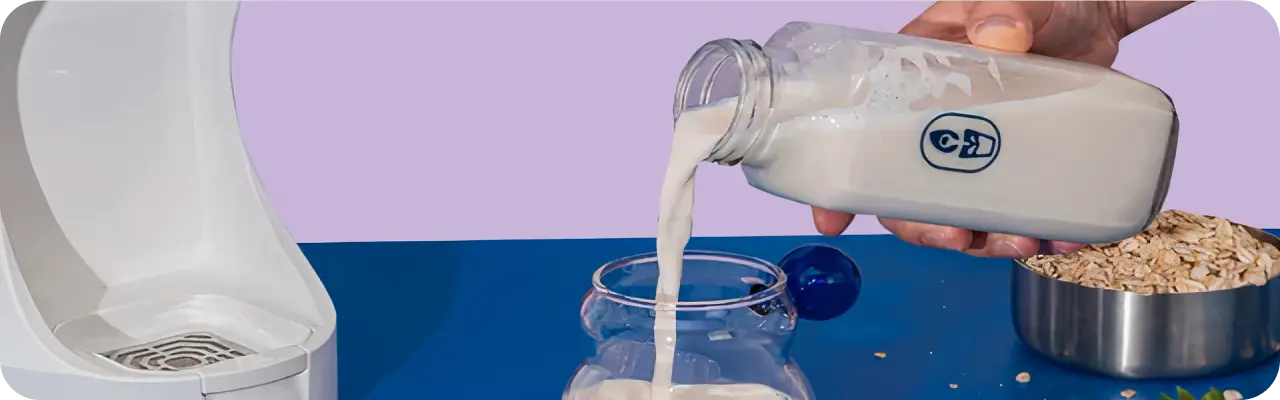
Fresh plant-based milk made with the Milky Plant Plus tastes like the ingredient you put in. Oat milk made from good rolled oats tastes of oats. Almond milk made from quality almonds tastes of almonds. There are no additives to mask or modify the flavour because there are no additives.
The Milky Plant Plus: Fresh Milk in 3 Minutes
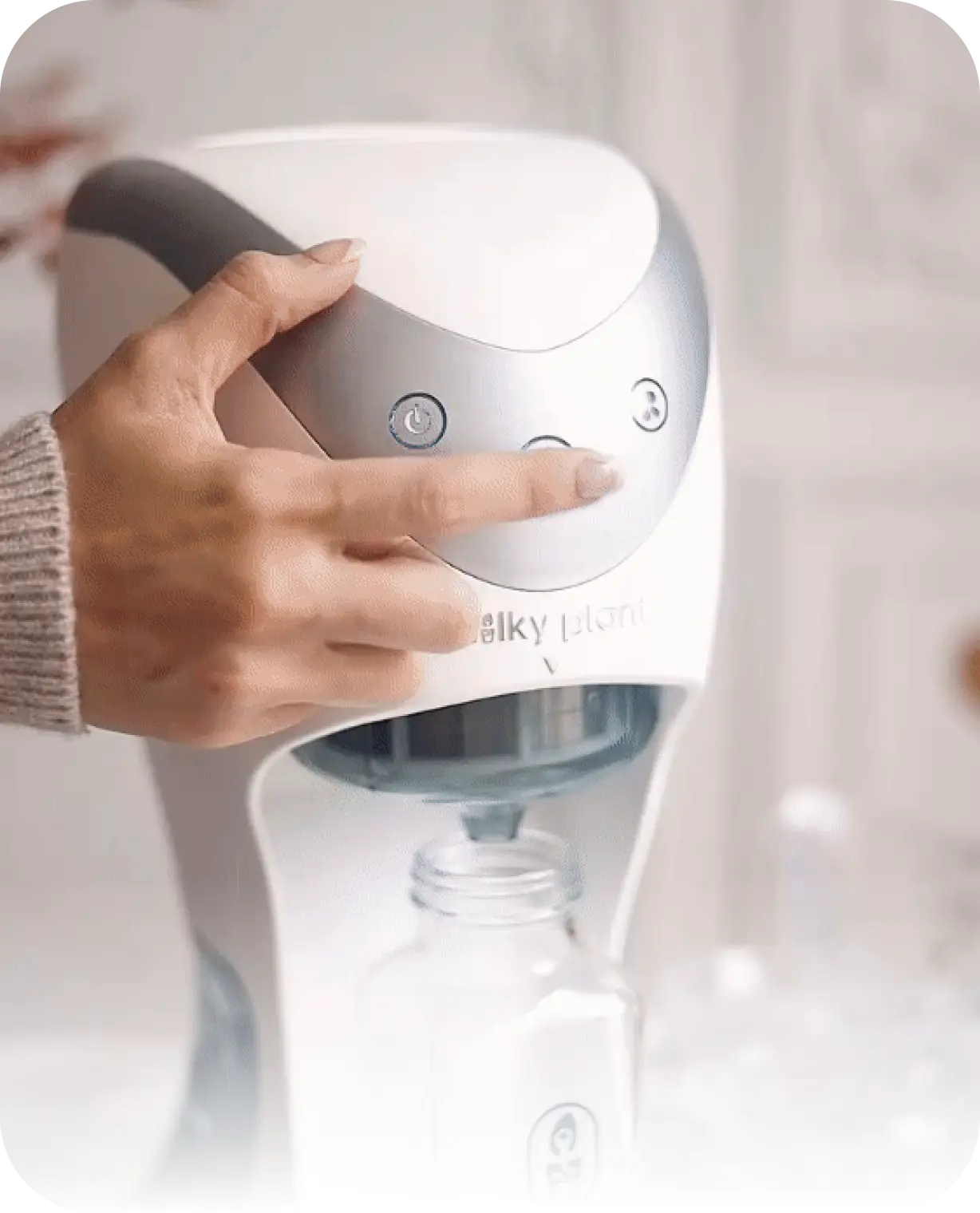
The Milky Plant Plus was designed to make fresh, homemade plant-based milk as simple and fast as possible - without the mess, the effort, or the manual straining that put most people off making their own.
Here's how it works:
- Add your ingredients - oats, almonds, cashews, hazelnuts, soya, rice, hemp, or macadamia
- Select your temperature - hot or cold
- Press the button
- Fresh plant-based milk in 3 minutes, automatically strained through the patented automatic strainer
The self-cleaning cycle takes seconds. One button. No scrubbing, no disassembly, no effort.
The result is fresh milk with no additives, no preservatives, and no packaging waste - at a fraction of the cost of anything you can buy in a supermarket.
The Payback Calculation
At its current price, the Milky Plant Plus pays for itself - in supermarket plant milk savings alone - within months for most households. After that, every litre you make is pure saving.
And unlike a supermarket habit, it scales with your household. More people, more consumption, more saving. The machine cost stays fixed. The ingredient cost stays minimal.
The supermarket plant milk habit is one of the most quietly expensive things in a modern household food budget - and one of the easiest to fix.
The ingredients are simple. The savings are significant. The taste is better. The environmental impact is dramatically lower.
The only question worth asking is why you haven't switched sooner.
Discover the Milky Plant Plus at milkyplant.com